

- The Transformative Power of AI Marketing Natural Language Processing
- Understanding Natural Language Processing (NLP)
- How NLP Works
- Applications of NLP in Digital Marketing
- Enhancing Customer Experience
- Revolutionizing Content Strategy
- Optimizing Audience Reach and Personalization
- Driving Sales and Lead Generation
- Improving Internal Operations
- Key NLP Techniques in Marketing
- Syntax Analysis
- Semantic Analysis
- The Future of AI Marketing Natural Language Processing
- Predictive and Prescriptive Analytics
- Challenges and Ethical Considerations
- Implementing NLP in Your Marketing Strategy
- Define Clear Goals
- Audit Existing Infrastructure
- Evaluate Staff Capabilities
- Select Appropriate Tools
- Test and Analyze Results
- Cultivate Innovation
- Conclusion
- FAQs
The Transformative Power of AI Marketing Natural Language Processing
n
The convergence of AI marketing natural language processing is reshaping how businesses connect with their audiences and optimize their strategies. Natural Language Processing (NLP), a branch of artificial intelligence, empowers computers to understand, interpret, and generate human language, opening up new possibilities for marketers. This article explores the multifaceted applications of NLP in digital marketing, offering insights into its mechanisms, benefits, and transformative potential.
n
Understanding Natural Language Processing (NLP)
n
At its core, AI marketing natural language processing involves enabling computers to process and comprehend human language, whether spoken or written. This is achieved through a combination of techniques, including machine learning, deep learning, and linguistics. NLP algorithms analyze text and speech, identifying patterns, context, and sentiment. This understanding allows for a range of applications, from simple task automation to complex data analysis and content generation.
n
How NLP Works
n
The process of NLP typically involves two primary phases: data preprocessing and algorithm development. Data preprocessing involves cleaning and preparing text data for machine analysis. This includes tokenization, which breaks down text into smaller units, stop word removal, which eliminates common words, lemmatization and stemming, which reduce words to their root forms, and part-of-speech tagging, which identifies the grammatical role of each word.
n
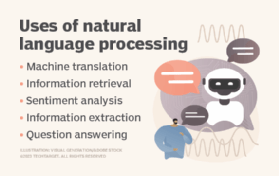
Once the data is prepared, algorithms are employed for analysis. These can be rule-based systems, which rely on predefined linguistic rules, or machine learning-based systems, which learn from training data and adapt their methods as more data is processed. These machine learning systems, often using deep learning and neural networks, can interpret complex aspects of language, including context, intent, and sentiment.
n
 nCredit: techtarget.com
n
Applications of NLP in Digital Marketing
n
The integration of AI marketing natural language processing has a broad impact on various aspects of digital marketing, enhancing efficiency, personalization, and customer engagement.
n
Enhancing Customer Experience
n
NLP's ability to understand human language opens new doors for customer interaction. Chatbots and virtual assistants, powered by NLP, offer 24/7 support, promptly answering queries and reducing wait times. This leads to heightened customer satisfaction and improved engagement. Sentiment analysis, another key NLP application, helps businesses understand customer opinions by analyzing feedback from various sources, including social media, reviews, and surveys. This insight enables companies to identify areas of improvement and address customer concerns proactively.
n
Revolutionizing Content Strategy
n
AI marketing natural language processing is also transforming content creation and strategy. NLP tools can analyze existing content to identify gaps and suggest relevant keywords, helping marketers create more effective and SEO-optimized content. These tools can also assist in generating content, from headlines and social media posts to blog articles and email copy. While human oversight remains crucial, NLP can significantly expedite content creation and ensure content is tailored to audience interests.
n
Optimizing Audience Reach and Personalization
n
NLP enhances audience reach through the analysis of vast amounts of customer data, including text and speech, enabling marketers to understand their audience's needs and preferences. Voice search capabilities, powered by NLP, allow businesses to target consumers using voice-activated devices. This data helps create highly personalized marketing campaigns that resonate with individual customers, boosting brand loyalty and driving conversions.
n
Driving Sales and Lead Generation
n
NLP plays a crucial role in sales and lead generation by identifying potential leads and qualifying them through analyzing interactions with customers. Chatbots can engage with website visitors, capturing leads and assessing their needs, resulting in more effective lead management and better conversion rates. Text mining and market research analysis uncover new opportunities and help businesses tailor their offerings to match customer demand.
n
Improving Internal Operations
n
Beyond customer-facing applications, NLP also optimizes internal processes. In human resources, NLP-based tools facilitate resume screening, automated interview coordination, and employee sentiment analysis, improving recruitment and workplace morale. In healthcare, NLP assists in deciphering medical notes, automating documentation, and providing disease diagnosis recommendations, improving efficiency and patient care.
n
Key NLP Techniques in Marketing
n
Several core NLP techniques drive its effectiveness in marketing applications. Syntax and semantic analysis are crucial for understanding the structure and meaning of language.
n
Syntax Analysis
n
Syntax analysis focuses on the grammatical arrangement of words in a sentence. Key techniques include:
n
- n
- Parsing: Analyzing the grammatical structure of a sentence, identifying parts of speech.
- Word Segmentation: Deriving individual words from a text string.
- Sentence Breaking: Identifying sentence boundaries within large texts.
- Morphological Segmentation: Dividing words into smaller units (morphemes).
- Stemming: Reducing words to their root forms.
n
n
n
n
n
n
Semantic Analysis
n
Semantic analysis focuses on the meaning behind words and phrases. Key techniques include:
n
- n
- Word Sense Disambiguation: Determining word meaning based on context.
- Named Entity Recognition (NER): Identifying and categorizing entities like names, places, and organizations.
- Natural Language Generation (NLG): Using data to generate new text.
n
n
n
n
 nCredit: aimarketingengineers.com
n
The Future of AI Marketing Natural Language Processing
n
The field of AI marketing natural language processing is continually evolving, with emerging trends and technologies promising even more powerful applications. Computer vision, for example, allows NLP systems to analyze images and videos. AI chatbots and virtual agents are becoming more sophisticated, offering increasingly personalized and efficient customer interactions.
n
Predictive and Prescriptive Analytics
n
Predictive analytics uses NLP to forecast customer behavior and sales outcomes, allowing marketers to develop more dynamic and effective campaigns. Prescriptive analytics, meanwhile, sorts data based on consumer motivations and intentions, enabling highly targeted advertising and content creation.
n
Challenges and Ethical Considerations
n
As NLP capabilities grow, so too do challenges. Concerns around data privacy, ethical considerations, and bias in algorithms must be addressed. Responsible AI development, with diverse data sets and transparency, is critical to ensure fair and accurate outcomes.
n
Implementing NLP in Your Marketing Strategy
n
To effectively leverage AI marketing natural language processing, businesses should adopt a strategic and systematic approach.
n
Define Clear Goals
n
Start by identifying specific goals, whether it's improving campaign effectiveness, saving time, or reducing costs. Clearly defined objectives and quantifiable KPIs are crucial for measuring success.
n
Audit Existing Infrastructure
n
Analyze your current marketing tools and data infrastructure to identify opportunities for NLP integration. Assess the quality, quantity, and accessibility of your data to determine suitability for AI applications.
n
Evaluate Staff Capabilities
n
Ensure your team has the training and knowledge to effectively implement NLP-based programs. This might involve investing in training, hiring consultants, or creating new roles.
n
Select Appropriate Tools
n
Choose NLP tools that align with your content strategy and budget. This could involve out-of-the-box solutions or custom-developed APIs.
n
Test and Analyze Results
n
Test your NLP implementations, monitor performance, and adjust your strategies based on the data. Comparing AI-generated content with human-generated content can provide valuable insights.
n
Cultivate Innovation
n
Foster a culture of innovation that encourages team members to experiment with new technologies. Encourage feedback, provide training, and position AI as a tool to enhance their skills rather than replace them.
n
 nCredit: aimarketingengineers.com
n
Conclusion
n
AI marketing natural language processing is no longer a futuristic concept but a present-day reality. Its ability to understand and interpret human language provides businesses with unprecedented opportunities to enhance customer experience, optimize marketing strategies, and improve internal operations. By adopting a strategic approach and addressing potential challenges, businesses can harness the transformative power of NLP to achieve sustainable growth and success. The future of marketing is increasingly intertwined with AI and NLP, making it essential for businesses to embrace these technologies to stay ahead in a competitive landscape.
n
FAQs
n
Question 1: What is Natural Language Processing (NLP)?nAnswer: NLP is a subfield of artificial intelligence and computer science that focuses on enabling computers to understand, interpret, and generate human language.
n
Question 2: Why is NLP important for business applications?nAnswer: NLP is crucial for business applications because it allows companies to analyze and extract valuable insights from vast amounts of text data, enabling them to improve customer experiences, automate processes, and make data-driven decisions.
n
Question 3: What are some common NLP techniques?nAnswer: Some common NLP techniques include tokenization, part-of-speech tagging, named entity recognition, sentiment analysis, topic modeling, and machine translation.
n
Question 4: How does NLP enable chatbots and virtual assistants?nAnswer: NLP enables chatbots and virtual assistants by allowing them to understand user queries, generate appropriate responses, and learn from interactions to improve over time.
n
Question 5: What is text classification in NLP?nAnswer: Text classification is an NLP task that involves categorizing text documents into predefined classes or topics based on their content.
n
Question 6: How does NLP support sentiment analysis?nAnswer: NLP supports sentiment analysis by identifying and extracting subjective information from text data, allowing businesses to understand customer opinions, emotions, and attitudes towards their products or services.
n
Question 7: What is named entity recognition in NLP?nAnswer: Named entity recognition is an NLP task that involves identifying and categorizing named entities (e.g., people, organizations, locations, and products) within text data.
n
Question 8: How does NLP enable text summarization?nAnswer: NLP enables text summarization by identifying the most important and relevant information within a text document and generating a concise summary that captures the main points.
n
Question 9: What is machine translation in NLP?nAnswer: Machine translation is an NLP task that involves automatically translating text from one language to another, allowing businesses to communicate with customers and partners in multiple languages.
n
Question 10: How can businesses implement NLP effectively?nAnswer: Businesses can implement NLP effectively by identifying specific use cases, selecting appropriate NLP techniques, investing in high-quality data, and collaborating with experts in NLP and data science.





