

- The Impact of AI on Marketing
- How AI Algorithms Work in Marketing
- Key Areas Where AI is Impacting Marketing
- Marketing Automation
- Data-Driven Decision Making
- Personalization and Customer Experience
- Chatbots and Customer Interaction
- Content Creation and Optimization
- Predictive Analytics
- Programmatic Advertising
- Types of AI Algorithms
- Supervised Learning Algorithms
- Unsupervised Learning Algorithms
- Reinforcement Learning
- Benefits of Using AI Algorithms
- Challenges of Implementing AI Algorithms
- Best Practices for Optimizing AI Algorithms
- The Future of AI in Marketing
- Conclusion
The rise of artificial intelligence (AI) has profoundly impacted numerous industries, and marketing is no exception. AI marketing algorithms are rapidly transforming how businesses approach customer engagement, data analysis, and campaign optimization. This article explores the transformative power of AI in marketing, examining its applications, benefits, challenges, and future implications. We will delve into how these algorithms work, the various types available, and how businesses can leverage them for enhanced marketing strategies.
n
The Impact of AI on Marketing
n
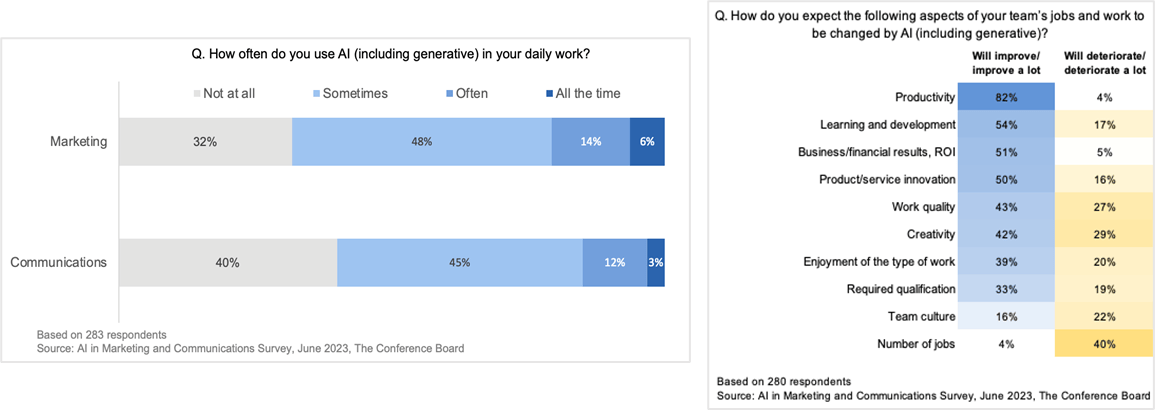
AI's influence on marketing is undeniable, with a significant increase in adoption rates. Studies show that a large percentage of marketers are already using or experimenting with AI tools in their daily work. This surge in adoption is driven by AI's ability to automate tasks, personalize customer experiences, and provide data-driven insights.
n
 nCredit: ebecmb8jq66.exactdn.com
n
The use of AI marketing algorithms is not just about automating repetitive tasks; it's about fundamentally changing how marketing strategies are developed and executed. These algorithms analyze vast amounts of data to uncover patterns and trends, enabling marketers to make more informed decisions and create more effective campaigns.
n
How AI Algorithms Work in Marketing
n
At their core, AI marketing algorithms are sets of instructions that enable machines to analyze data, perform tasks, and make decisions. They rely on machine learning techniques to learn from data and improve their performance over time. These algorithms can process large amounts of data far more quickly and accurately than humans, extracting valuable insights that would otherwise be missed.
n
These algorithms work by identifying patterns, recognizing behaviors, and empowering machines to make decisions. They collect data, use it for training, and then modify their knowledge based on the results. This allows them to predict trends, evaluate accuracy, and optimize processes, leading to more effective marketing strategies.
n
Key Areas Where AI is Impacting Marketing
n
AI marketing algorithms are revolutionizing various aspects of marketing. Here are some key areas where their impact is most significant:
n
Marketing Automation
n
AI has revolutionized marketing automation by streamlining tasks such as data analysis, customer segmentation, personalized content creation, and social media management. This allows marketers to focus on strategic aspects of their campaigns, while AI handles the more routine activities.
n
Data-Driven Decision Making
n
Marketers now leverage AI marketing algorithms for data-driven decision-making. Advanced analytics and machine learning algorithms analyze vast amounts of data, providing insights into consumer behavior, preferences, and trends. This allows for more impactful and targeted strategies.
n
Personalization and Customer Experience
n
AI-driven algorithms enhance marketing by delivering personalized experiences to prospects and customers. By analyzing user data, AI tailors content, advertisements, and recommendations, creating a more engaging and personalized customer experience.
n
Chatbots and Customer Interaction
n
AI-powered chatbots and virtual assistants play a crucial role in real-time customer interaction, providing personalized recommendations, addressing queries, and guiding users through the purchasing process. These tools offer 24/7 support and improve customer satisfaction.
n
Content Creation and Optimization
n
AI tools are increasingly used for content creation and optimization, handling tasks such as generating compelling copy and optimizing website content for search engines. This allows marketers to focus on creativity and strategy, while AI handles the more technical aspects of content creation.
n
Predictive Analytics
n
AI marketing algorithms are transforming marketing forecasting, enabling marketers to anticipate trends, identify opportunities, and mitigate risks more effectively. By analyzing historical data, AI can predict future outcomes and guide strategic decisions.
n
Programmatic Advertising
n
Programmatic advertising, powered by AI, automates the buying and placing of digital ads. AI algorithms analyze user behavior in real-time, ensuring ads are delivered to the right audience at the right time, maximizing ad spend efficiency.
n
Types of AI Algorithms
n
There are three main categories of AI marketing algorithms: supervised, unsupervised, and reinforcement learning. Each type has its unique characteristics and applications:
n
Supervised Learning Algorithms
n
Supervised learning algorithms are trained on labeled data to make predictions or classify new data. They work by cross-validating inputs with desired outputs and learning over time. These algorithms are commonly used for classification and regression problems.
n
Use Cases: Marketers use supervised learning for predicting sales, mapping customer sentiments, and tracking stock prices. They are also used in text recognition, object categorization, and spam detection.
n
Unsupervised Learning Algorithms
n
Unsupervised learning algorithms use unlabeled data to identify patterns and form clusters. They are trained on raw data to draw correlations and extract relevant insights. Unsupervised learning is often used for customer segmentation and understanding customer behavior.
n
Use Cases: Unsupervised learning is used for customer segmentation, anomaly detection, and personalized news feeds.
n
Reinforcement Learning
n
Reinforcement learning algorithms train by interacting with an environment and receiving feedback in the form of rewards or penalties. The algorithm adjusts its actions based on this feedback to achieve the desired outcome.
n
Use Cases: Reinforcement learning is used in recommendation systems, gaming, and traffic control.
n
Benefits of Using AI Algorithms
n
The integration of AI marketing algorithms brings numerous benefits to businesses:
n
- n
- Increased Efficiency: AI automates repetitive tasks, freeing up marketers to focus on strategic initiatives.
- Improved ROI: AI-driven insights and personalized campaigns lead to higher conversion rates and better return on investment.
- Enhanced Customer Experience: AI enables personalized interactions, leading to increased customer satisfaction and loyalty.
- Data-Driven Decisions: AI provides accurate and timely insights, enabling marketers to make more informed decisions.
- Predictive Capabilities: AI can forecast trends and predict customer behavior, allowing for proactive marketing strategies.
n
n
n
n
n
n
Challenges of Implementing AI Algorithms
n
Despite the numerous benefits, there are challenges associated with implementing AI marketing algorithms:
n
- n
- Data Quality: AI algorithms rely on high-quality data for accurate predictions. Inaccurate or biased data can lead to flawed outcomes.
- Training AI Solutions: Training AI algorithms requires significant time, resources, and expertise.
- Ethical Concerns: The use of AI in marketing raises ethical concerns about manipulation, bias, and privacy.
- Regulatory Compliance: Businesses must adhere to consumer data regulations and ensure transparency in their AI-driven marketing practices.
- Job displacement: There are concerns about AI potentially leading to job losses in marketing, particularly in lower-level roles.
n
n
n
n
n
n
Best Practices for Optimizing AI Algorithms
n
To maximize the effectiveness of AI marketing algorithms, businesses should:
n
- n
- Ensure Data Quality: Collect and use high-quality, relevant, and diverse data for training.
- Define Clear Goals: Set clear objectives for AI implementation to guide algorithm selection and training.
- Monitor and Test Regularly: Continuously monitor AI performance and make adjustments to ensure accuracy and effectiveness.
- Prioritize Transparency: Be transparent with customers about how their data is being used and provide options to opt-out of targeted marketing.
- Address Ethical Concerns: Implement responsible AI practices to prevent bias, manipulation, and privacy violations.
- Invest in Talent: Hire or train professionals with expertise in AI, machine learning, and data science.
n
n
n
n
n
n
n
The Future of AI in Marketing
n
The future of marketing is inextricably linked with AI. We can expect to see a widespread adoption of AI-powered tools and platforms across industries. These tools will offer advanced capabilities such as predictive analytics, natural language processing, and computer vision, allowing marketers to gain deeper insights into customer behavior and deliver more personalized and impactful campaigns.
n
As AI marketing algorithms become more sophisticated, we will see a shift towards autonomous marketing, where AI-driven systems can autonomously execute and optimize marketing campaigns in real-time. This will require marketers to adapt to new roles, focusing on strategy, creativity, and building meaningful connections with customers.
n
Conclusion
n
AI marketing algorithms are transforming the marketing landscape, offering unprecedented opportunities for businesses to enhance their strategies, improve customer experiences, and drive growth. While there are challenges associated with implementing AI, the benefits far outweigh the risks for organizations that are willing to adapt and invest in this technology. By understanding how AI algorithms work, the various types available, and the best practices for implementation, marketers can leverage the power of AI to achieve remarkable results and stay competitive in the rapidly evolving digital world.





